

A scalable SEO program is not a larger content calendar. It is a system that keeps every query, page, task and result connected as the website grows. See how this fits into the broader SeoWorkflow approach.
Start with the page, not the task
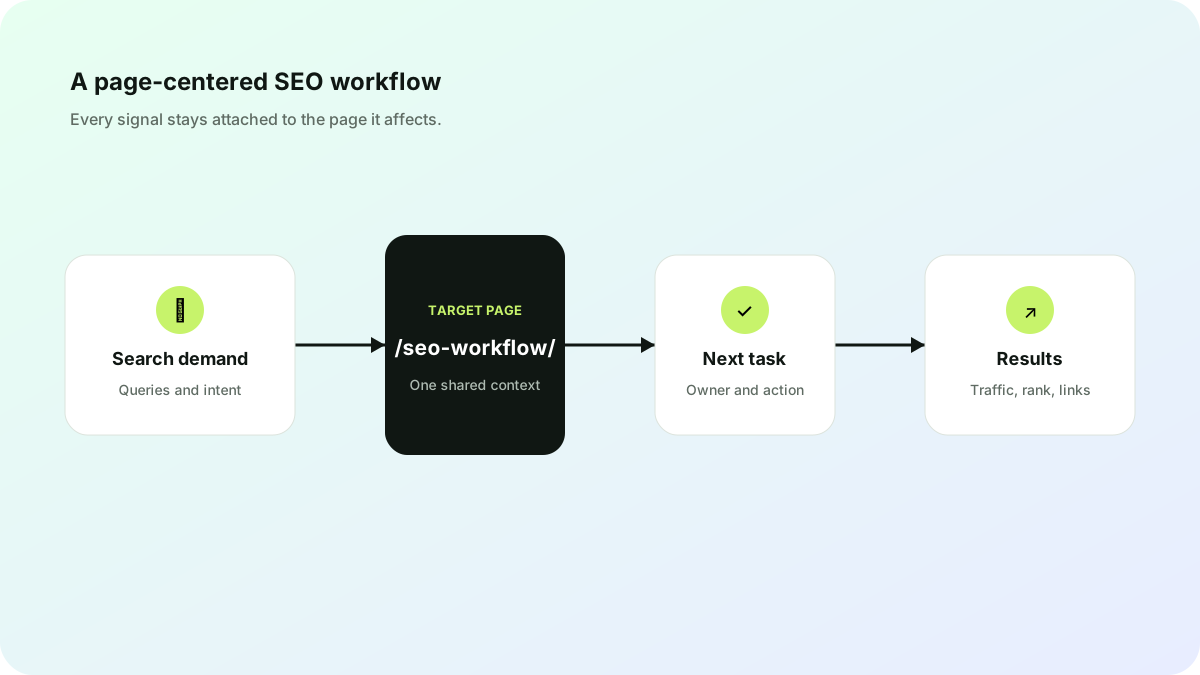
The page is the most useful unit of SEO work. Search demand maps to it, writers improve it, links support it and analytics describe its results. When those signals live in separate tools, teams spend more time rebuilding context than making decisions.
For every target page, keep four things together:
- the query group and search intent;
- the current page or planned URL;
- the next production or optimization task;
- the traffic, conversion, ranking and link signals used to judge the result.
A simple operating model
Use a short sequence that the whole team understands:
- Map a query group to one target page.
- Decide whether to create, update or leave the page alone.
- Assign the next action to one owner.
- Measure the result against the original intent.
Keep the decision attached to the evidence
Comments and briefs should explain why the page needs work, not repeat what the task title already says.
Use tables for decisions, not decoration
Short comparisons should remain compact:
| Signal | Next action |
|---|---|
| Uncovered demand | Plan a new page |
| Falling rankings | Review content and links |
| Stable performance | Leave the page alone |
Large operational tables can scroll horizontally without breaking the article width:
| Page | Query group | Traffic | Position | Links | Owner | Next action |
|---|---|---|---|---|---|---|
| /seo-workflow/ | SEO workflow software | 1,248 | 4 | 18 | Alex | Refresh examples |
| /keyword-clustering/ | Keyword clustering software | 684 | 8 | 11 | Maya | Improve internal links |
| /content-briefs/ | SEO content brief | 512 | 12 | 9 | Sam | Expand coverage |
Make ownership visible
Each stage should have one clear owner and one visible outcome. A simple workflow is usually enough: brief, writing, review, publication and measurement.
Avoid adding stages that do not change the work. If a handoff exists only because two spreadsheets need to be reconciled, remove the handoff rather than formalizing it.
A good workflow makes the next decision obvious without hiding the evidence that produced it.
When an automation needs a compact status rule, keep it readable:
const needsAttention = page.positionChange < -3 || page.brokenLinks > 0;

if (needsAttention) queue.add(page);
Review exceptions, not every row
As the project grows, the system should bring attention to pages that need action: falling positions, uncovered demand, missing links or overdue work. Healthy pages do not need another dashboard ritual.
The goal is a short, prioritized queue where every task still carries the strategy and evidence behind it.
Frequently asked questions
How many stages should an SEO content workflow have?
Use the fewest stages that still give each handoff a clear owner. For most teams, planning, writing, review, publication and measurement are enough.
What should trigger a content update?
Review a page when rankings fall, search intent changes, important coverage is missing or business priorities shift.
Should every page be reviewed on the same schedule?
No. Prioritize pages with meaningful changes or clear opportunities instead of reviewing healthy pages by default.